Nobel Prize 2026
Teaching chemistry to pick one hand
Henri B. Kagan and Kenso Soai share the 2026 Nobel Prize in Chemistry for showing how chemical reactions can end up making only one of two mirror-image molecules. It solves a long-standing puzzle about life’s chemistry, and it matters for making medicines.
· France and Japan
On 7 October 2026, the Royal Swedish Academy of Sciences awarded the Nobel Prize in Chemistry to Henri B. Kagan and Kenso Soai, “for the discovery of non-linear effects and autocatalysis in asymmetric organic synthesis”.
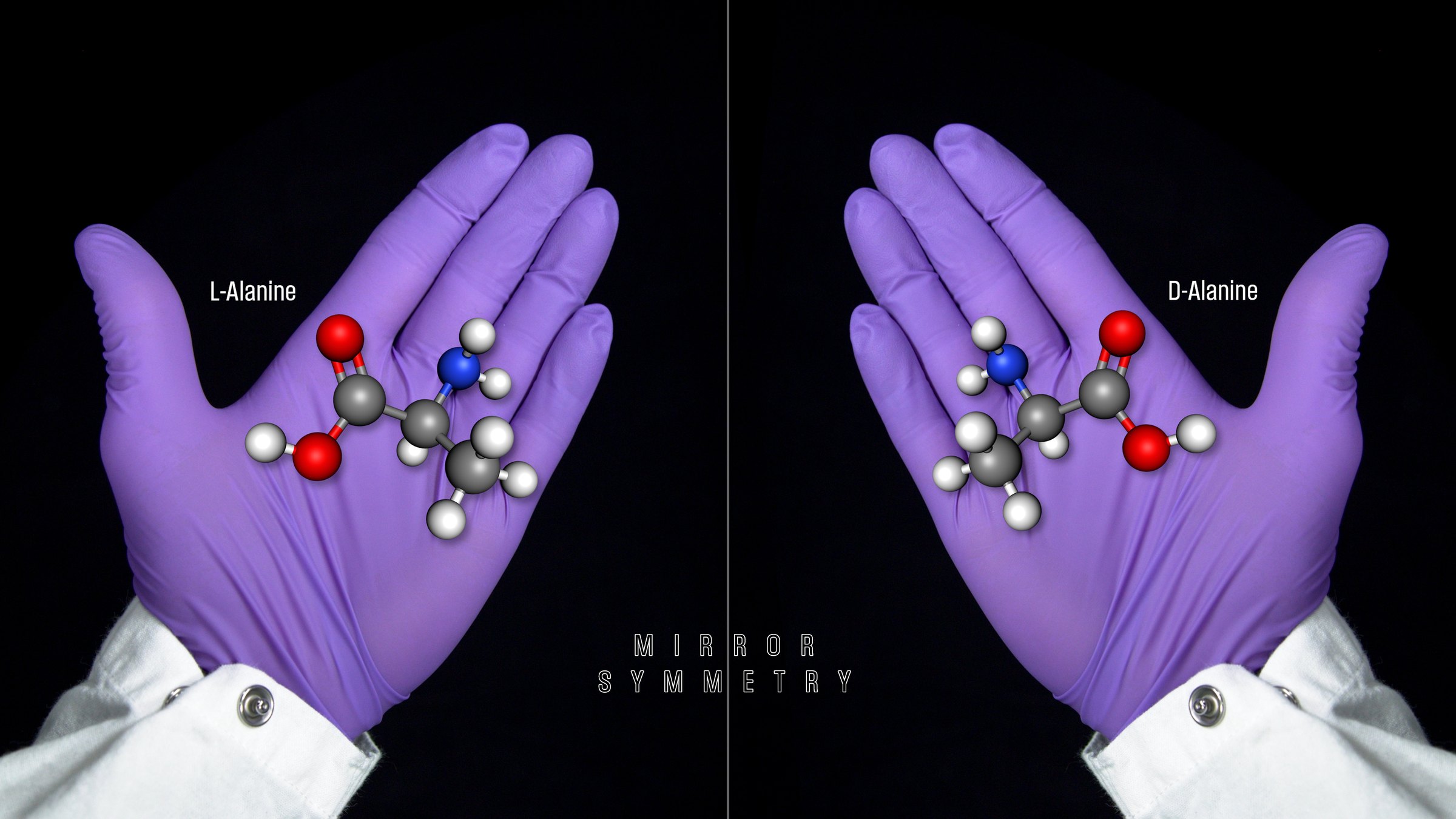
Some molecules, such as amino acids, come in two forms that are mirror images of each other, like your left and right hands. Living things use only one: the proteins in your cells are built from one form, and the other is rarely found in nature. Yet when chemists made these molecules in the lab, they always got equal amounts of both.
In 1986, Henri Kagan found a new way to steer reactions towards a bigger excess of one form than anyone had thought possible. Kenso Soai took the next step. In 1995 he described the first reaction that could, in principle, make only one form, and in 2003 he made it happen. Apart from life itself, no one had done this before.
Why it matters
In medicines, only one of the two mirror forms has the desired effect. Kagan’s and Soai’s discoveries have been decisive for chemists who design reactions to make medicines.
And they help answer a question that puzzled chemists for more than a century: how life’s one-handed chemistry could emerge in the first place.